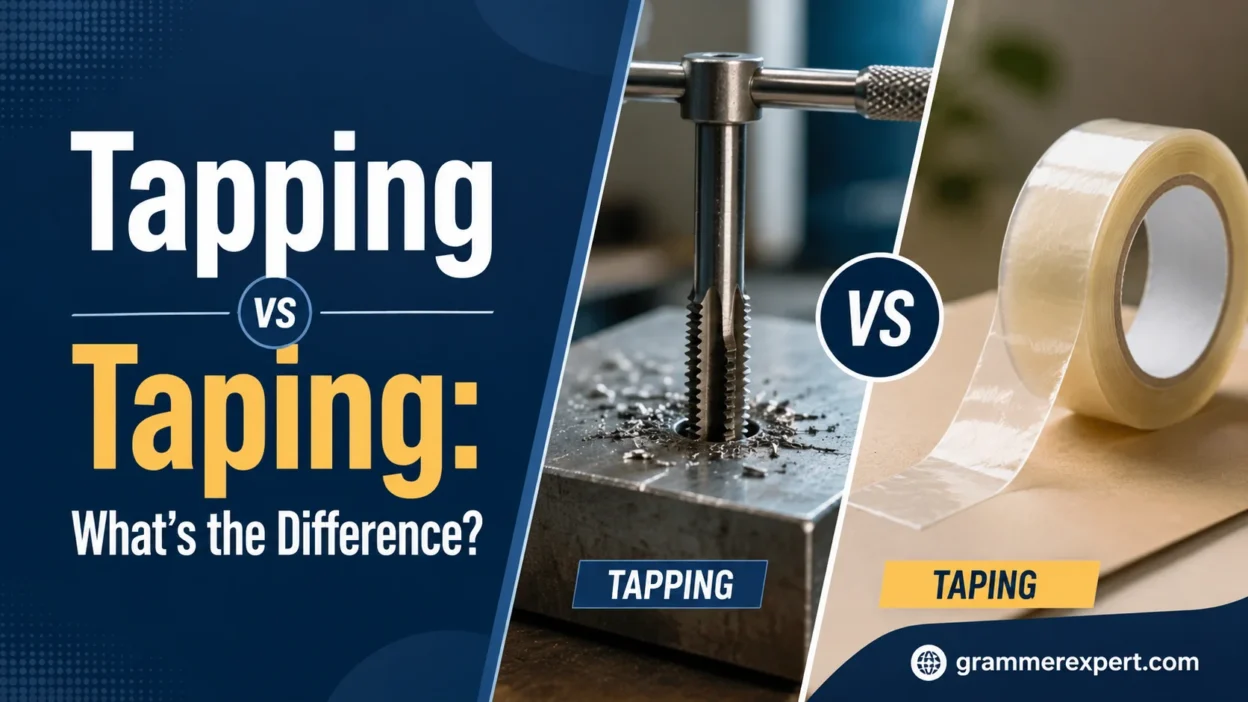
I once paused mid-writing, staring at tapping and taping, and kept wondering about “Tapping vs Taping: What’s the Difference?” in one clear line of thought. These words look almost identical, sound alike, and often confuse people in everyday language. The confusion usually comes when choosing the right word, because each has different meanings. The former refers to lightly striking or touching something, like drumming fingers on a desk or hitting a phone in a rhythmic way, while the latter is about attaching, securing, or affixing using adhesive tape, and sometimes recording audio or video onto videos.
From my experience, this small difference can make a big impact on clear communication. When you mix them up, your point suddenly makes no sense, and the whole idea may feel off. For example, tapping is a quick, light blow or a series of blows made against something, while taping is about fastening. Both have several definitions, and understanding the difference between these is important for precise and effective writing. This guide will explore their main uses, common mistakes, and give practical examples so you can use them with confidence.
So, don’t worry if you have been unsure before—you’re not alone. This simple comparison clears it all at once. If you stop and think about how one is used, it becomes much easier to understand. Whether you are writing an article or just a short message, knowing helps your message stay clear. Without going further ado, remember it is about motion and sound, while the other is about tape. Keep this in mind, and you couldn’t go wrong, no matter the situation.
What Does Tapping Mean?
At its core, tapping refers to a light touch or repeated gentle strike. It often involves fingers, hands, or small tools.
Think of it as a quick, soft action. Nothing heavy. Nothing forceful.
READ ALSO: Arial vs Aerial: What’s the Difference
Common Meanings of Tapping
- Lightly touching a surface
- Repeated small movements
- Producing soft rhythmic sounds
- Extracting liquid (like sap from trees)
Everyday Examples of Tapping
- You tap your phone screen to open an app
- Someone taps your shoulder to get attention
- A student taps a pencil during class
- Workers tap trees to collect syrup
Sentence Examples
- She kept tapping the screen because the app froze.
- He was tapping his fingers on the desk during the meeting.
- Farmers are tapping maple trees this season.
Key Insight
Tapping always involves motion. It’s physical, light, and often repetitive.
What Does Taping Mean?
Now let’s switch gears.
Taping has two primary meanings. Both are very different from tapping.
Core Meanings of Taping
- Recording audio or video
- Using adhesive tape to attach or secure something
Where You See Taping in Real Life
- Recording a TV show or podcast
- Sealing a box with tape
- Wrapping a bandage or sports injury
- Fixing broken items temporarily
Sentence Examples
- They are taping the interview for later broadcast.
- She is taping the package before shipping it.
- The show was taped yesterday evening.
Key Insight
Taping involves recording or sticking. No light touching here. It’s about capturing or securing.
Tapping vs Taping: Key Differences Explained Clearly
Now let’s put both words side by side. This clears confusion instantly.
Quick Comparison Table
FeatureTappingTapingCore MeaningLight touch or repeated motionRecording or using adhesive tapeAction TypePhysical movementRecording or fasteningCommon ContextScreens, fingers, surfacesVideos, packages, repairsExampleTapping a phoneTaping a showFocusMotionRecording or attaching
Simple Breakdown
- Tap = Touch
- Tape = Record or Stick
That single distinction solves most confusion.
When to Use Tapping (With Real-Life Context)
Use tapping when describing physical interaction, especially small or repeated movements.
Situations Where Tapping Fits Perfectly
- Using smartphones or tablets
- Expressing impatience or nervous habits
- Testing objects or surfaces
- Creating rhythmic sounds
Real-Life Scenario
You’re waiting for a message reply. You start tapping your phone screen again and again.
That’s tapping.
More Practical Examples
- A gamer tapping controls rapidly
- A teacher tapping the board for attention
- Rain tapping lightly against a window
Pro Tip
If you can feel the motion, you’re likely dealing with tapping.
When to Use Taping (With Clear Examples)
Use taping when you mean recording or attaching something with tape.
Common Use Cases
- Filming or recording content
- Packaging and shipping
- Medical or athletic support
- Repairing or holding objects together
Real-Life Scenario
You’re recording a podcast episode. You say, “We’re taping today’s session.”
That’s correct usage.
More Examples
- A production team taping a TV episode
- A worker taping a damaged cable
- An athlete taping their ankle before a game
Pro Tip
If it involves a camera, microphone, or tape roll, you’re dealing with taping.
Common Mistakes People Make (And How to Fix Them)
Even fluent speakers mix these up. Let’s fix that.
Incorrect vs Correct Usage
- ❌ I am tapping the interview ✔ I am taping the interview
- ❌ She is taping on the screen ✔ She is tapping on the screen
- ❌ They were tapping the show last night ✔ They were taping the show last night
Why These Mistakes Happen
- Similar spelling
- Fast pronunciation
- Autocorrect errors
- Lack of context awareness
Memory Trick That Actually Works
Tap = Touch Tape = Record or Stick
Short. Clear. Effective.
Why “Tapping vs Taping” Gets Confusing
Let’s be honest. These words look like twins.
Here’s why people struggle:
Key Reasons
- Only one letter difference
- Similar pronunciation in casual speech
- Overlapping contexts in tech and media
- Typing speed leads to errors
Interesting Fact
In fast conversation, “tapping” and “taping” can sound almost identical. Context becomes the only clue.
Tapping vs Taping in Modern Technology
Technology has changed how often we use these words.
Tapping in Tech
Today, tapping dominates daily life.
- Smartphones rely on tapping gestures
- Apps use tap-based navigation
- User interfaces are designed around taps
Taping in Tech
“Taping” has evolved.
- People now say “recording” more often
- Digital tools replaced physical tapes
- Still used in media production language
Example Comparison
- You tap an app to open it
- You tape a video for later viewing
Case Study: Real-World Usage in Media and Everyday Life
Scenario One: Office Meeting
A team records a meeting for remote employees.
Correct phrase: “We are taping the meeting.”
Wrong phrase: “We are tapping the meeting.”
Scenario Two: Mobile App Interaction
A user tries to refresh a page.
Correct phrase: “Keep tapping the screen.”
Wrong phrase: “Keep taping the screen.”
Scenario Three: Packaging Business
A worker seals boxes for shipping.
Correct phrase: “She is taping the boxes.”
Quick Quiz: Test Your Understanding
Fill in the blanks:
- She is ___ the phone screen repeatedly
- They are ___ the live event
- He kept ___ his fingers on the desk
- The crew is ___ the show tonight
Answers
- tapping
- taping
- tapping
- taping
Advanced Usage Insights (For Better Writing and Speaking)
Understanding subtle differences improves your communication.
Nuance Matters
- “Tapping” often suggests ongoing action
- “Taping” suggests intentional recording or fixing
Tone and Context
- “Tapping” feels casual and physical
- “Taping” feels purposeful and structured
Writing Tip
If your sentence involves technology or human movement, double-check which word fits.
Practical Cheat Sheet
Keep this handy.
Use Tapping When:
- You describe touch or movement
- You mention fingers or hands
- You refer to screens or surfaces
Use Taping When:
- You talk about recording
- You mention cameras or audio
- You refer to adhesive tape
FAQs
What is the main difference between tapping and taping?
Tapping means lightly striking or touching something, often in a repeated or rhythmic way. Taping means attaching something with adhesive tape or recording audio or video.
Can tapping and taping be used interchangeably?
No, they cannot be used interchangeably. Using the wrong word can confuse the meaning of your sentence and make your message unclear.
Is tapping related to sound?
Yes, tapping often creates a sound because it involves light hitting or drumming on a surface, like tapping fingers on a desk or phone.
Does taping always mean using adhesive tape?
Not always. Taping can also mean recording audio or video, though the adhesive meaning is more common in everyday use.
Why do people confuse tapping and taping?
People confuse them because they look and sound very similar, but their meanings are quite different.
How can I remember the difference easily?
Think of tapping as action and motion (touching or hitting), and taping as fixing or recording using tape.
Are both words commonly used in writing?
Yes, both are commonly used, especially in everyday language, instructions, and communication.
What happens if I mix them up in writing?
If you mix them up, your sentence may lose clarity or even change meaning completely, which can confuse readers.
Conclusion
Understanding the difference between tapping and taping is important for clear and effective writing. Even though the words look alike, their meanings are very different. By practicing their correct use and paying attention while writing, you can avoid common mistakes and communicate your ideas with confidence and clarity.